For many women, mental health is closely connected to the circumstances in which they live.
A woman may receive treatment for a mental health condition but continue to struggle in an unsafe home. Another may have supportive people around her but little freedom to make decisions about her own life. Someone else may want to seek help but lack the money, privacy or confidence to do so.
These experiences reveal something important about women and mental health: emotional wellbeing is influenced not only by what happens within the mind, but also by the safety, relationships and opportunities available in everyday life.
Understanding women’s mental health therefore requires looking beyond symptoms and asking a wider question: What does a woman need to feel safe, supported and capable of shaping her own future?
Understanding the Connection Between Women and Mental Health
Mental health affects how people think, feel, manage stress, maintain relationships and participate in daily life.
Although mental health conditions can affect anyone, women’s experiences are often shaped by additional social and economic pressures.
Unpaid caregiving responsibilities, financial dependence, family expectations, unequal opportunities, domestic violence and limited access to healthcare can all affect women’s mental wellbeing.
According to the World Health Organization’s guidance on women’s health, women’s physical and mental health are influenced by social, economic and structural inequalities, including restricted decision-making power and exposure to gender-based violence.
These pressures do not mean that every woman will develop a mental health condition. They do, however, influence the circumstances in which women experience distress, seek treatment and recover.
Recognising these differences is essential when designing effective mental health support for women.
Women’s Mental Health in India: Understanding the Challenges
In India, access to mental healthcare is not always determined by medical need alone.
A woman may recognise that she needs support but hesitate to seek it because of financial difficulties, family pressure, limited access to services or fear of social judgement.
These barriers can be particularly difficult for women living in rural areas, experiencing poverty or depending on others for housing and healthcare.
Research from the National Mental Health Survey provides an important perspective.
A study examining mental disorders in West Bengal reported that 13.07% of the surveyed adult population experienced a current mental illness. The prevalence of severe mental illness among women was estimated at 2.22%.
The research, based on the 2015–16 survey, also highlighted a substantial treatment gap in the state.
These findings reinforce the importance of making mental healthcare accessible, affordable and responsive to women’s circumstances.
But access to treatment is only part of the picture.
For women facing abandonment, homelessness or prolonged social exclusion, recovery may also depend on rebuilding the conditions necessary for a stable life.
Why Safety Is Essential for Women’s Mental Health
Safety is more than protection from immediate physical danger.
It also involves having a stable place to live, access to basic necessities, freedom from abuse and an environment where a person is treated with respect.
Physical Safety and Stable Living Conditions
Living without secure accommodation can make managing mental health considerably more difficult.
Uncertainty about food, shelter, personal security or access to medicines can create additional distress and interfere with treatment.
For women already experiencing serious mental health difficulties, these challenges may become particularly overwhelming.
For women already experiencing serious mental health difficulties, these challenges may become particularly overwhelming.
A safe environment creates the conditions in which regular meals, personal hygiene, rest, medical attention and daily routines become more manageable.
Emotional Safety and Respect
A woman may have a roof over her head and still feel emotionally unsafe.
Constant criticism, humiliation, intimidation or the fear of being judged can affect confidence and willingness to communicate.
Emotional safety means being able to express concerns, ask questions and seek assistance without being mocked or dismissed.
The WHO’s fact sheet on violence against women identifies intimate-partner and sexual violence as major public health concerns with serious mental health consequences, including depression, anxiety and post-traumatic stress.
This is why safety must be understood as both a physical and psychological need.
Mental health support becomes more effective when a woman does not have to spend every day worrying about her safety.
Why Support Matters During Mental Health Recovery
Mental health recovery is rarely something a person has to manage entirely alone.
Appropriate support can help women access treatment, maintain routines, manage difficult periods and work towards personal goals.
However, support should not mean taking control of someone’s life.
Listening Without Making Assumptions
A woman experiencing mental health difficulties may need help expressing what she feels or identifying what kind of assistance would be useful.
Listening without immediately correcting, dismissing or interpreting her experience can help create trust.
It is equally important to avoid assuming that a mental health diagnosis automatically makes someone incapable of participating in decisions.
Women should be included in discussions about their treatment, daily routines and future wherever possible, with appropriate decision-making support when needed.
Access to Professional Care
Family encouragement and emotional reassurance can be valuable, but they are not substitutes for professional mental healthcare.
Depending on individual needs, treatment may involve psychiatric consultations, prescribed medication, psychological therapies, counselling or structured rehabilitation.
Continuity matters, particularly for women living with conditions that require ongoing monitoring.
Support That Encourages Participation
Being supported should not mean becoming a passive recipient of care.
Where appropriate, women can benefit from opportunities to participate in everyday activities, express preferences, build relationships and take on responsibilities.
These experiences help preserve a sense of identity beyond illness.
AVIEW explores how social attitudes affect treatment and recovery in its article on mental health stigma in India.
Support is most meaningful when it recognises a woman’s needs without overlooking her abilities.
Why Independence Matters for Women’s Mental Wellbeing
Independence is often associated with earning an income or living alone.
But independence can begin with much smaller decisions.
Choosing what to wear, managing a daily routine, helping prepare a meal, making a purchase or expressing an opinion can all provide opportunities for greater personal agency.
For women recovering from mental illness, these experiences may become important steps towards rebuilding confidence.
Everyday Independence Builds Confidence
Daily activities provide opportunities to practise skills and participate more actively in life.
Cooking, cleaning, managing personal hygiene and taking responsibility for manageable tasks can gradually strengthen practical abilities.
These activities should be adapted to individual needs rather than treated as tests that every woman must pass.
AVIEW discusses this relationship in its article on life skills and mental health recovery.
Financial Independence Can Create Greater Security
Financial independence can expand a woman’s choices.
Having access to personal savings, earning opportunities or greater control over resources may reduce dependence on others and support long-term stability.
For women whose lives have been affected by mental illness, opportunities to develop practical or vocational skills can become valuable pathways towards economic participation.
However, productivity should never determine a person’s worth.
A woman who cannot work independently remains equally deserving of dignity, safety and appropriate support.
Independence Does Not Mean Living Without Help
Some women may eventually live independently and manage most daily responsibilities.
Others may continue to benefit from supported accommodation, assistance with medication or regular professional follow-ups.
Both can represent meaningful progress.
The goal is not to remove support prematurely, but to help each person exercise as much choice and independence as her circumstances allow.
How AVIEW Connects Safety, Support and Independence
For homeless and abandoned women living with mental illness, these three needs often exist together.
A woman may require immediate safety before treatment can begin. She may then need sustained medical attention and emotional support before gradually rebuilding everyday abilities.
At AVIEW (A Village for Independent and Enterprising Women), this understanding forms part of the organisation’s rehabilitation approach.
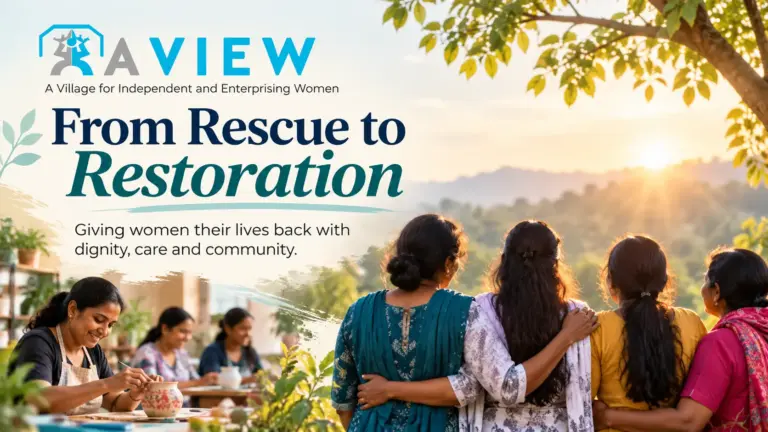
Through The AVIEW Way — Rescue, Rehabilitate and Restore, eligible destitute women living with mental illness receive safe accommodation, medical and psychiatric care, food, clothing, medication support and assistance with daily routines.
As their recovery progresses, women are encouraged to participate in activities such as gardening, organic farming, animal husbandry, sewing, quilting and jewellery making.
These activities offer opportunities to practise skills, contribute to community life and explore livelihood possibilities.
For women who are ready, the next stage may involve semi-independent living, independent living or reunification with family where appropriate.
AVIEW’s approach recognises that mental health recovery involves more than managing symptoms.
It also involves helping women regain confidence, make choices and participate meaningfully in everyday life.
What Families and Communities Can Do to Support Women’s Mental Health
Families and communities play an important role in shaping the environment in which women seek help and recover.
Support can begin with everyday behaviour.
Take mental health concerns seriously. Avoid dismissing distress as weakness, attention-seeking or an inability to manage responsibilities.
Encourage appropriate treatment. Help women access qualified professionals and understand available care options without using shame or coercion.
Respect personal decisions. Include women in discussions affecting their lives rather than assuming others should always decide for them.
Recognise safety concerns. Understand that violence, intimidation, unstable housing and financial dependence can create additional barriers to wellbeing.
Create opportunities for participation. Encourage manageable responsibilities, social interaction, education or livelihood activities according to the woman’s interests and abilities.
These actions do not replace professional care, but they can help make everyday environments more supportive.
Frequently Asked Questions About Women and Mental Health
1. Why is women’s mental health important?
Women’s mental health influences emotional wellbeing, relationships, daily functioning and participation in society. Addressing social barriers alongside healthcare needs can help women access appropriate treatment and support.
2. What factors can affect women’s mental health?
Factors may include biological influences, existing mental health conditions, poverty, violence, discrimination, caregiving pressures, financial insecurity and limited healthcare access. Their effects vary between individuals.
3. How does financial independence affect mental health?
Greater financial security and control over resources can support personal choice and reduce certain forms of dependence. However, financial independence is not a substitute for mental healthcare, nor is it a requirement for personal dignity.
4. How can families support women during mental health recovery?
Families can listen without judgement, encourage professional treatment, respect privacy, include women in decisions and help maintain a safe and supportive environment.
5. How does AVIEW support women living with mental illness?
AVIEW supports eligible destitute and abandoned women through safe residential care, psychiatric treatment support, daily-living activities, vocational skills and pathways towards rehabilitation, social reintegration and greater independence.
Building a Future Where Women Can Feel Safe, Supported and Independent
When discussing women and mental health, the focus often remains on symptoms, diagnosis and treatment.
These are important, but they do not tell the whole story.
A woman also needs an environment where she feels safe, where her concerns are heard and where her abilities are recognised.
She needs access to care without shame.
She needs the freedom to participate in decisions about her life.
And wherever possible, she needs opportunities to develop the skills, confidence and resources that support independence.
For women experiencing homelessness, abandonment or severe social exclusion, rebuilding these foundations may require sustained rehabilitation and long-term assistance.
At AVIEW, that work is reflected in a commitment to helping women move towards greater stability, dignity and participation in society.
Readers can learn more through AVIEW’s journey from rescue to restoration or support AVIEW’s rehabilitation work.
Because caring for women’s mental health is not only about helping women feel better. It is also about creating the conditions in which they can live better.
This article is intended for general awareness and does not replace professional medical advice, diagnosis or treatment.