The AVIEW Way: Rescue. Rehabilitate. Restore.
At AVIEW – A Village for Independent and Enterprising Women – the mission begins with one belief: a woman living with mental illness should never be defined by the road on which she was found, the illness she carries, or the circumstances that separated her from home.
AVIEW works to rehabilitate and empower abandoned women living with mental illness through care, skills and sustainable livelihoods. Its vision is a society where these women can live with dignity, acceptance and independence.
This philosophy comes alive through the AVIEW Way: Rescue. Rehabilitate. Restore.
What makes the model distinctive is that AVIEW is not designed as a closed institution. It is an unlocked, community-based residential rehabilitation model for destitute women with mild to moderate psychiatric illness – created as an alternative to prolonged institutionalisation on one hand and unsupported home-based treatment on the other. Women live within a community, rebuild daily-living skills, learn vocational skills and gradually move towards independence.
Rescue: When Someone Chooses to Stop
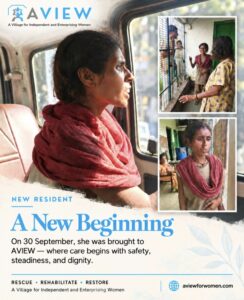
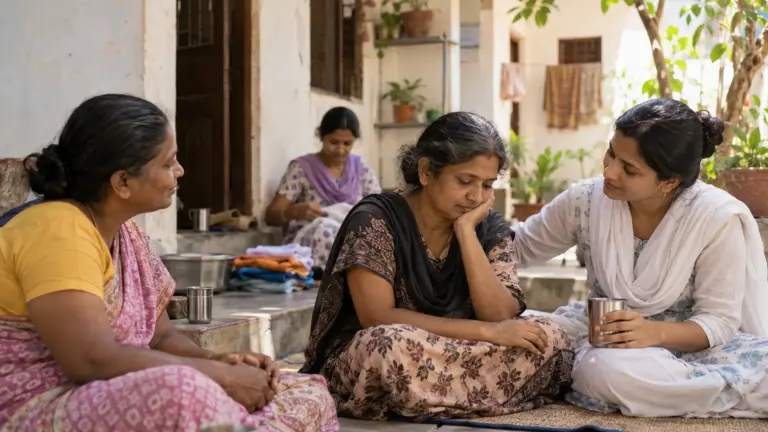
For many women, the journey begins on a street, railway platform or at a police station – physically unwell, disoriented, sometimes unable to remember their name, address or where they belong.
Hundreds of people may pass them.
Rehabilitation begins when somebody stops.
Local volunteers, social workers and law-enforcement personnel identify women requiring support. Necessary police procedures, including a General Diary entry where applicable, are completed before responsibility for the woman is assumed and she is safely relocated.
A dedicated vehicle may have to be hired because a vulnerable woman experiencing psychiatric distress cannot always travel safely through ordinary public transport.
According to AVIEW’s operational estimates, a rescue can cost approximately ₹6,000–₹8,000 per woman, with another ₹3,000–₹4,000 often required for transport and vehicle hire during rescue, relocation and rehabilitation.
But reaching safety is only the beginning.
Rehabilitation Begins With Dignity
A woman arriving at AVIEW may first need things most of us rarely have to think about:
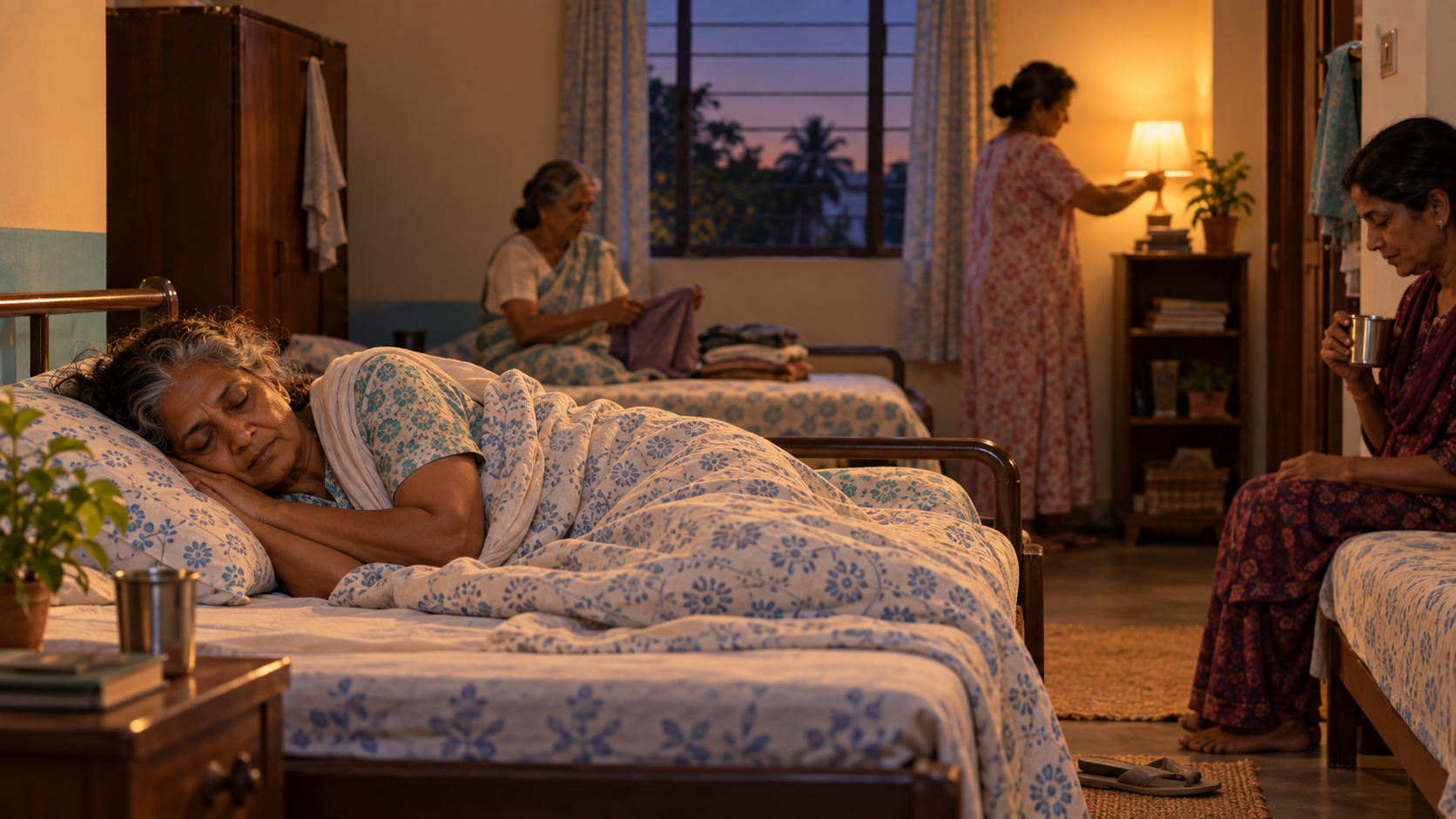
A bath. Clean clothes. Nutritious food. Medical attention. A safe bed.
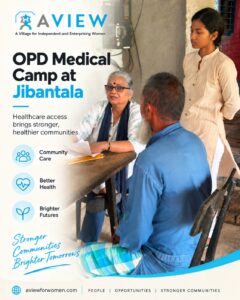
Residents receive medical and psychiatric treatment, medicines, counselling, accommodation, food, clothing and a safe environment. Regular treatment, medication adherence and supportive therapies are essential not only for recovery but also for preventing relapse.
AVIEW estimates that approximately ₹10,000–₹12,000 is spent every month on each resident towards accommodation, food, clothing, medicines, treatment and rehabilitation support.
When rescue and transportation are included, the direct first-year expenditure on one woman can already reach approximately ₹1.29 lakh–₹1.56 lakh, before exceptional medical expenses, specialised care, manpower, infrastructure and wider programme costs are considered.
Recovery Means Learning to Live Again
Mental-health rehabilitation cannot end when symptoms begin to stabilise.
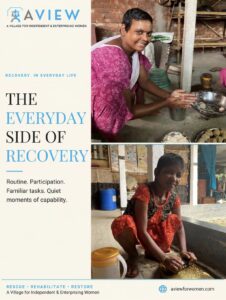
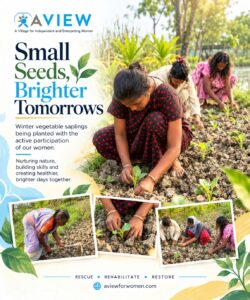
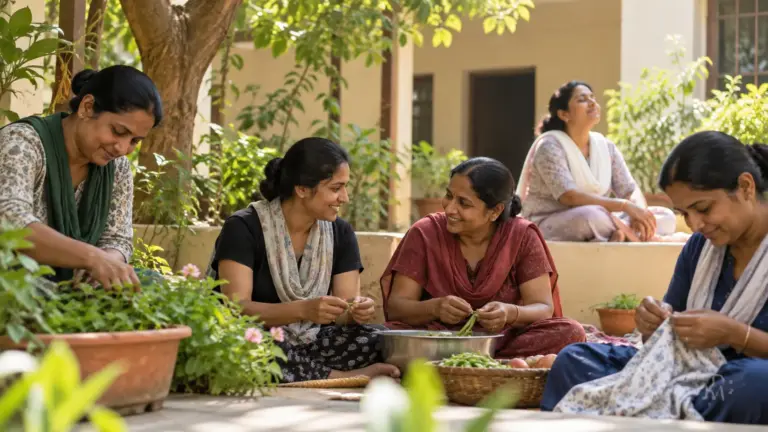
Women at AVIEW gradually relearn everyday activities – bathing independently, dressing neatly, cooking, cleaning, maintaining their surroundings and participating in communal life.
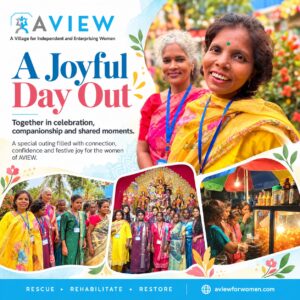
They are also encouraged to participate in music, yoga, drawing, painting, dance and other recreational and cultural activities.
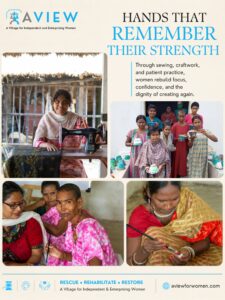
Alongside these activities come skills that can create economic value: animal husbandry, organic farming, sewing, quilting, embroidery, jewelry making, basket weaving, candle making, integrated farming, composting and other crafts.
These activities are both therapeutic and practical.
They allow a woman to move beyond being seen only as a “patient” and begin seeing herself again as someone who can create, contribute, earn and make decisions.
From Rehabilitation to Financial Independence
The ultimate goal is not dependency on AVIEW.
It is greater independence.
Residents who are ready can move first into semi-independent living, while AVIEW works towards family tracing, restoration where appropriate and continued medication and follow-up support.
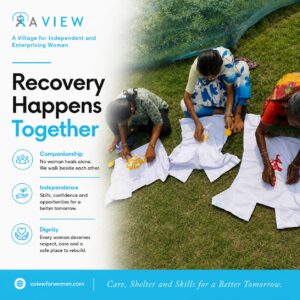
This progression is already producing measurable results.
Women living in AVIEW’s semi-independent quarters at Bhatpara have accumulated individual bank savings exceeding ₹50,000 each. The Jibantala centre has developed organic farming, vegetables, mushrooms and vermicompost as income-generating activities, while farmers’ markets and sales of residents’ products provide opportunities for their work to connect with the wider community.
This is rehabilitation moving towards something more powerful: economic agency.
122 Women Rescued. 72 Restored. Nearly 30 Still Being Supported.
AVIEW’s updated figures tell a stronger story of impact.
- 122 women have been rescued.
- 72 have been restored to their families or other appropriate residential alternatives.
- Seven have progressed into semi-independent living, while another seven have moved into independent living.
- According to AVIEW’s latest internal figures, nearly 30 residents currently remain within its treatment and supported-living ecosystem.
- And AVIEW’s reach extends beyond residential rehabilitation.
- Its Jibantala medical clinics and outreach initiatives have treated more than 1,850 men and women on an outpatient basis, with subsidised medicines also being provided.
- Three additional centres – Bhatpara, Mukundapur and Rudrapur – already support consultation and semi-independent or independent living.
- This matters because AVIEW is not proposing an untested idea.
- It is seeking to scale a model already operating on the ground.
When Restoration Means Coming Home
Behind every statistic is a person.
Puja Roy, also known as Madhuri Das, was brought to AVIEW’s Jibantala Centre by Canning Police Station in October 2025. During counselling, she struggled to recall her identity, personal history and home.
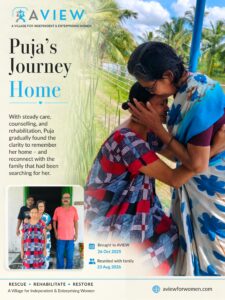
Regular medication, counselling and group sessions gradually helped her recover.
Eventually, she remembered her complete address.
Her family was traced.
They had been searching for her for nearly two years.
On 23 August 2026, Puja went home with her brother and other family members. AVIEW’s responsibility did not end at the reunion: medication support and telephone counselling continued as part of her aftercare.
This is what restoration means. Not merely keeping somebody alive. Helping somebody return to life.
The Need Is Far Greater Than Existing Capacity
India’s Census 2011 recorded 17.73 lakh houseless people, including 7.26 lakh women.
Mental illness and homelessness can create a particularly dangerous cycle. Indian research estimates that approximately 20–25% of homeless people may live with severe and persistent mental illness.
West Bengal carries a significant mental-health burden. National Mental Health Survey findings reported current mental illness prevalence of 13.07% in West Bengal and severe mental illness of 2.32%; among women, current severe mental illness was estimated at 2.22%. The research also highlighted a treatment gap exceeding 85% in the state.
There is no reliable current official count specifically of homeless women with severe mental illness, and AVIEW should not claim one.
What the evidence does establish is that the potential need is many times greater than present rehabilitation capacity.
Why Community-Based Rehabilitation Matters
AVIEW’s approach also reflects the broader direction of modern mental-health care.
The World Health Organization advocates moving away from long-stay institutional models towards accessible, person-centred and community-based mental-health services, including psychosocial rehabilitation, supported living, social participation and continuity of care.
That is precisely the principle AVIEW has been developing: treatment should help a woman return to community life rather than simply move her from one form of isolation to another.
The Next AVIEW: Building a Network, Not Just a Bigger Home
AVIEW now wants to expand across West Bengal and eventually beyond, including neighbouring regions such as Odisha and Assam.
The vision is not one enormous institution.
It is a network of care.
Expansion would mean stronger rescue partnerships with police stations, hospitals, railway communities and grassroots organisations; more trained volunteers and social workers; dedicated rescue transportation; additional rehabilitation and transitional homes; better food and accommodation; stronger psychiatric and medical access; diagnostics and medicines; family tracing; livelihood programmes; and systematic post-restoration monitoring.
Locations such as Medinipur and Birbhum could be connected through district-level partnerships and local workers.
Extending Care Through Technology
Restoration should not mean losing access to treatment.
A woman who has returned to a village in Medinipur or Birbhum should not need to travel to Kolkata for every follow-up.
Where clinically appropriate, AVIEW’s future model can combine physical rehabilitation with teleconsultation, remote psychiatric review, counselling, medication monitoring and local social-worker support.
Digital mental-health services can extend the reach of specialists to rural communities while local volunteers and professionals provide the physical support that technology cannot replace. WHO itself identifies digital technologies and remote care as useful components of expanded community mental-health systems.
Over time, the same networked approach can support partnerships beyond West Bengal.
From 122 Women Towards the Next 1,000
AVIEW’s ambition should be substantial – but credible.
Using available homelessness and mental-health evidence only as a planning framework, a long-term goal could be to build the capacity to reach approximately 850–1,050 women through different levels of intervention.
Not all would require residential admission.
Some may need rescue and intensive rehabilitation. Others may need counselling, medicines, family-reintegration support, livelihood assistance or remote follow-up.
As AVIEW’s network, infrastructure and partnerships mature, a longer-term stretch ambition of reaching approximately 1,250–1,600 women can become something to build towards.
The objective is not to promise numbers before capacity exists.
It is to build the capacity that makes those numbers possible.
What CSR Support Can Make Possible
For AVIEW, funding translates directly into care.
- It can put a vehicle on the road when a rescue call comes.
- It can provide medicines, psychiatric consultations, diagnostic tests and nutritious meals.
- It can improve living conditions.
- It can employ another social worker, counsellor or caregiver.
- It can create another rehabilitation or supported-living unit.
- It can strengthen livelihood programmes that turn skills into income.
- It can connect a restored woman living hundreds of kilometres away with the clinician who understands her history.
And it can strengthen the systems behind every success — documentation, case management, outcome tracking, volunteer networks, donor reporting and partnerships.
AVIEW already provides periodic reports to donors, facilitates donor and statutory visits, encourages residents to participate in community festivals and fairs, showcases their products, and engages students from academic institutions in internships and field exposure.
Scaling AVIEW therefore means scaling not merely beds, but an ecosystem of rescue, treatment, livelihood, inclusion and continuity of care.
The Next Chapter of the AVIEW Way
AVIEW has demonstrated that rescue can become rehabilitation.
Rehabilitation can become independence.
And restoration can mean that a woman once thought lost returns to a family, a livelihood, a community – or builds a new life of her own.
The next chapter requires more rescue capacity, more homes, better healthcare, stronger nutrition, more social workers and volunteers, greater livelihood opportunities, technology-enabled follow-up and partnerships capable of reaching women beyond one geography.
- Sometimes the outcome will be financial independence.
- Sometimes it will be safe and supported living.
- And sometimes it will be a family opening its door to someone it thought it had lost forever.
- Because survival should never be the final goal.
Every woman deserves the chance to regain her health, reclaim her identity, rebuild her independence and live again with dignity.