
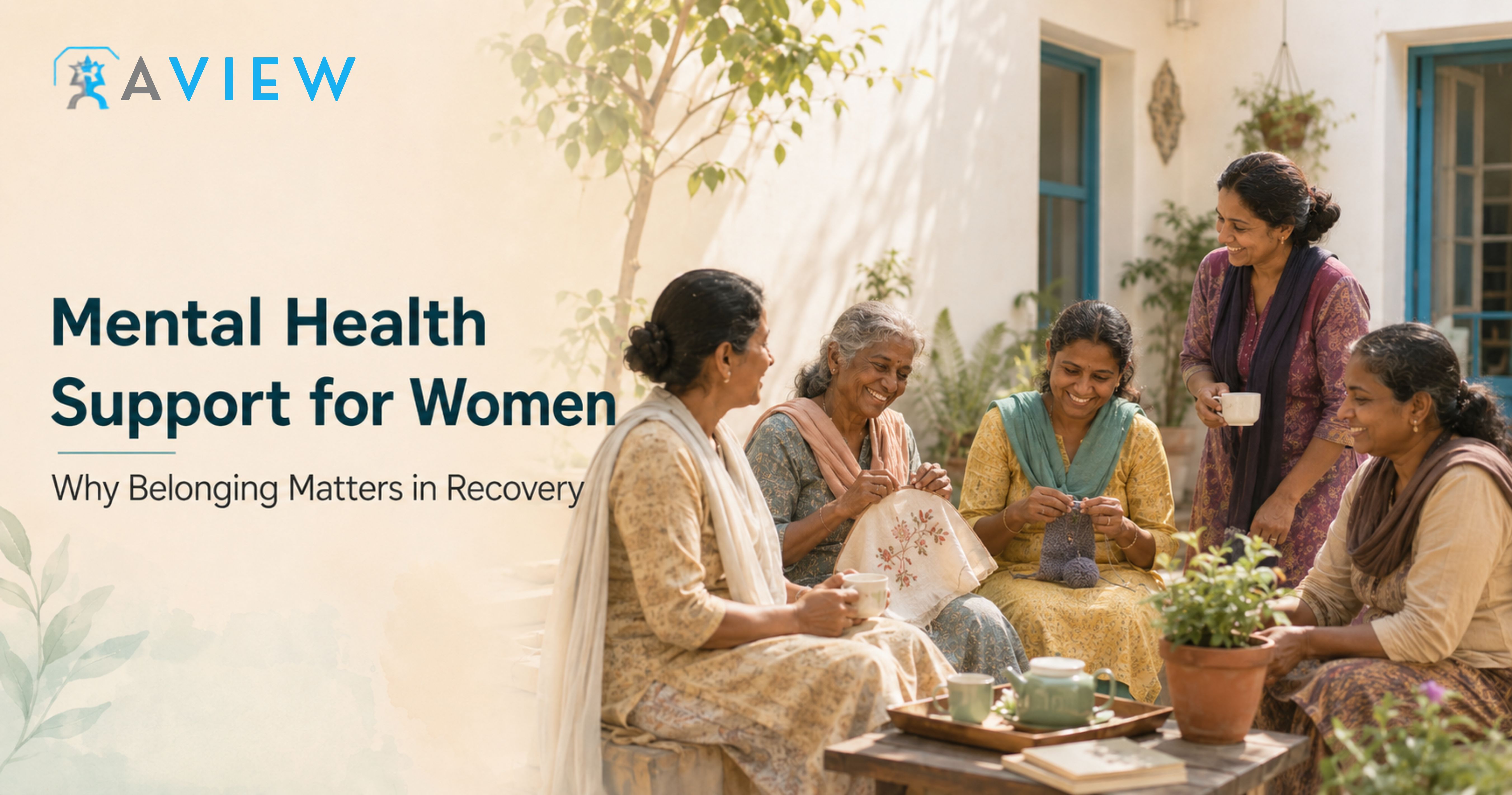
Mental Health Support for Women: Why Belonging Matters in Recovery
Mental health support becomes more meaningful when women are not only treated, but also remembered, included and valued. Belonging can turn a place of care into a community where relationships, confidence and participation gradually return.
Mental health support is not limited to counselling, medication or clinical appointments. At AVIEW, A Village for Independent and Enterprising Women, it also means helping destitute and abandoned women with mental illness experience safety, companionship, purpose and a place in everyday life.
A woman may receive food, shelter and treatment yet continue to feel invisible. Recovery can deepen when someone greets her by name, notices her absence from a shared meal or trusts her with a meaningful responsibility. Together, these gestures say: you belong here.
Why Mental Health Support Must Include Belonging
Mental health care may begin with psychiatric assessment, prescribed treatment, safe accommodation or help with daily living. These are essential foundations after homelessness, abandonment or prolonged distress.
However, recovery is not only the reduction of symptoms. It is also the gradual return of identity, relationships and participation.
The World Health Organization’s guidance on community-based mental health care emphasises care that reduces isolation, supports recovery in everyday environments and respects human rights. Recovery also happens within social settings.
Belonging may be rebuilt through simple experiences:
- Being addressed respectfully by name
- Having a familiar place at the table
- Being invited without pressure
- Being asked what she prefers
- Having her contribution acknowledged
Effective mental health support creates room for these moments.
Belonging and Mental Health: What Inclusion Really Means
Belonging is more than living among other people. A woman can stay in a full residential centre and still feel isolated.
Real inclusion means that she is recognised as an individual, involved in ordinary decisions and able to participate at a manageable pace. Care is not only delivered to her; daily life is built with her.
Person-centred care asks what she enjoys, which routines make her feel secure, whom she trusts, what she can do independently and where she needs support.
These questions shift attention from what is “wrong” to what helps her connect and grow, while recognising that no woman is defined only by a diagnosis.
How Mental Health Support Builds Confidence Through Daily Life
Mental health recovery for women is often visible in ordinary changes: joining others for tea, returning to a familiar skill or accepting a small responsibility.
Being Remembered Restores Individuality
Using a woman’s name, remembering her preferences and noticing changes in her routine affirm that she is known. For someone who has been ignored or spoken over, consistent recognition can help rebuild trust.
Shared Meals Create Connection
Meals create rhythm, familiarity and gentle social contact. A regular place at the table says that a woman is expected. Helping prepare food or expressing a preference allows her to participate naturally.
Invitations Keep the Door Open
A woman may decline an activity because she is anxious, tired or uncertain. An inclusive environment respects that refusal without permanently excluding her.
Inviting her again another day shows that her place has not disappeared. Gardening, cooking, stitching, music, celebrations and animal care offer different ways to connect. The aim is opportunity, not compulsory participation.
Meaningful Roles Rebuild Self-Worth
Mental health support should not make women permanent recipients of help. Where appropriate, they can also teach, contribute and take responsibility.
Watering plants, arranging materials or showing another resident a skill can restore competence. Meaningful work matters not only because it may lead to income, but because it can strengthen identity, purpose and confidence.
Relationships Are Part of Mental Health Recovery
Facilities and programmes matter, but relationships often determine whether a space feels safe.
Trust grows through ordinary reliability: a caregiver returns when promised, a peer saves a seat and a staff member listens without rushing. This matters for women whose earlier relationships involved neglect or rejection.
Keeping promises, asking permission, respecting privacy and avoiding infantilising language build supportive relationships. Peer companionship can also reduce isolation and make participation feel safer.
How AVIEW Creates Community-Based Mental Health Support
AVIEW works with destitute, abandoned and psychologically distressed women with mild to moderate mental illness. Its role extends beyond residential care and treatment coordination.
Through The A VIEW Way, women receive support with daily living, psychiatric care, structured routines, practical skills and pathways towards social reintegration. Community inclusion is part of recovery.
A Residence Shaped by Everyday Life
A supportive home should contain work, rest, shared meals, personal space and relationships – not feel like a waiting room.
AVIEW’s residential and vocational environment combines housing, community life, farming and skill-based activities. Women participate in the space rather than remaining passive.
Skills as Participation
At AVIEW, cooking, gardening, sewing, jewellery-making, animal care and farming support routine and vocational participation. These activities are not cures; their value lies in structure, choice and accomplishment.
AVIEW’s livelihood initiatives also connect women’s work with the wider community. Skills developed within care can become useful, shared and valued beyond it.
Supported Independence
Independence does not mean removing support suddenly. It may involve making more choices, managing daily activities and preparing gradually for semi-independent living or family reconnection.
WHO guidance on supported living services for mental health promotes arrangements that support independence while respecting rights and decision-making.
For some women, progress may lead to family reintegration. For others, continued supported living may be safer. A dignity-first approach does not impose one definition of success on everyone.
Community Support for Women with Mental Illness
No NGO can create lasting inclusion alone. Families, neighbourhoods and public institutions influence whether women can participate without shame.
Community support for women with mental illness can begin with practical actions:
- Use respectful language instead of labels
- Include women in family and community conversations
- Respect the privacy of medical information
- Support prescribed treatment without making it her entire identity
- Offer realistic responsibilities
- Maintain contact during residential care
- Prepare carefully for reintegration
Mental health awareness becomes meaningful when it changes behaviour. Knowing the language of wellbeing is not enough if women are still excluded from decisions, work and relationships.
A women-focused mental health organisation can create pathways towards recovery, but communities must make room for women to return, contribute and belong.
Where Mental Health Help Fits In
Belonging is not a substitute for professional care. A woman experiencing psychological distress may require assessment, psychiatric treatment, counselling or other mental health services.
India’s National Mental Health Programme and Tele-MANAS provide access to mental health help, including 24-hour tele-mental health support through 14416 or 1800-89-14416.
Clinical care and community support should reinforce each other: treatment supports stability, while relationships make life beyond treatment more connected.
What Genuine Belonging Looks Like
Belonging appears in daily details: noticing a missed lunch, extending an invitation or respecting a need for quiet.
It also means accepting that recovery is not linear. A woman may participate actively one week and withdraw the next. Her place should not disappear because she is having a difficult period.
Conditional inclusion says, “You are welcome when you are doing well.”
Genuine belonging says, “You remain part of us while you recover.”
When acceptance does not depend entirely on progress or productivity, a woman can recover without fearing that one setback will cost her place.
Conclusion: Mental Health Support Needs a Community
Mental health support is strongest when it addresses both care and connection. Treatment, safe housing and daily assistance may provide stability, but belonging helps restore identity, confidence and participation.
For women who have experienced exclusion, recovery may begin with a name remembered, a seat kept or a skill appreciated.
At AVIEW, community is not separate from care. It is part of care. Women receive structured support while rediscovering their abilities, relationships and place in everyday life.
Readers can support AVIEW’s work or contact AVIEW to learn more.
A woman does not belong because she has completed recovery. She belongs because she is human. Mental health support becomes more effective when the life around her reflects that truth.
Frequently Asked Questions
What is mental health support?
It can include treatment, counselling, safe accommodation, daily assistance, supportive relationships and access to appropriate services.
Why is belonging important for mental health recovery?
Belonging can reduce isolation and rebuild trust, self-worth and confidence while women participate in relationships and meaningful activities.
How can residential care support women’s mental health?
Residential care can provide safety, treatment coordination, predictable routines, privacy, shared activities, vocational opportunities and gradual preparation for independent or supported living.
How does AVIEW support women with mental illness?
AVIEW provides women-centred residential support, psychiatric care coordination, daily routines, practical skills, community participation and pathways towards social reintegration for eligible destitute women.
How can families promote social inclusion?
Families can maintain respectful contact, include women in decisions, protect their privacy, support treatment and approach reintegration with patience.