
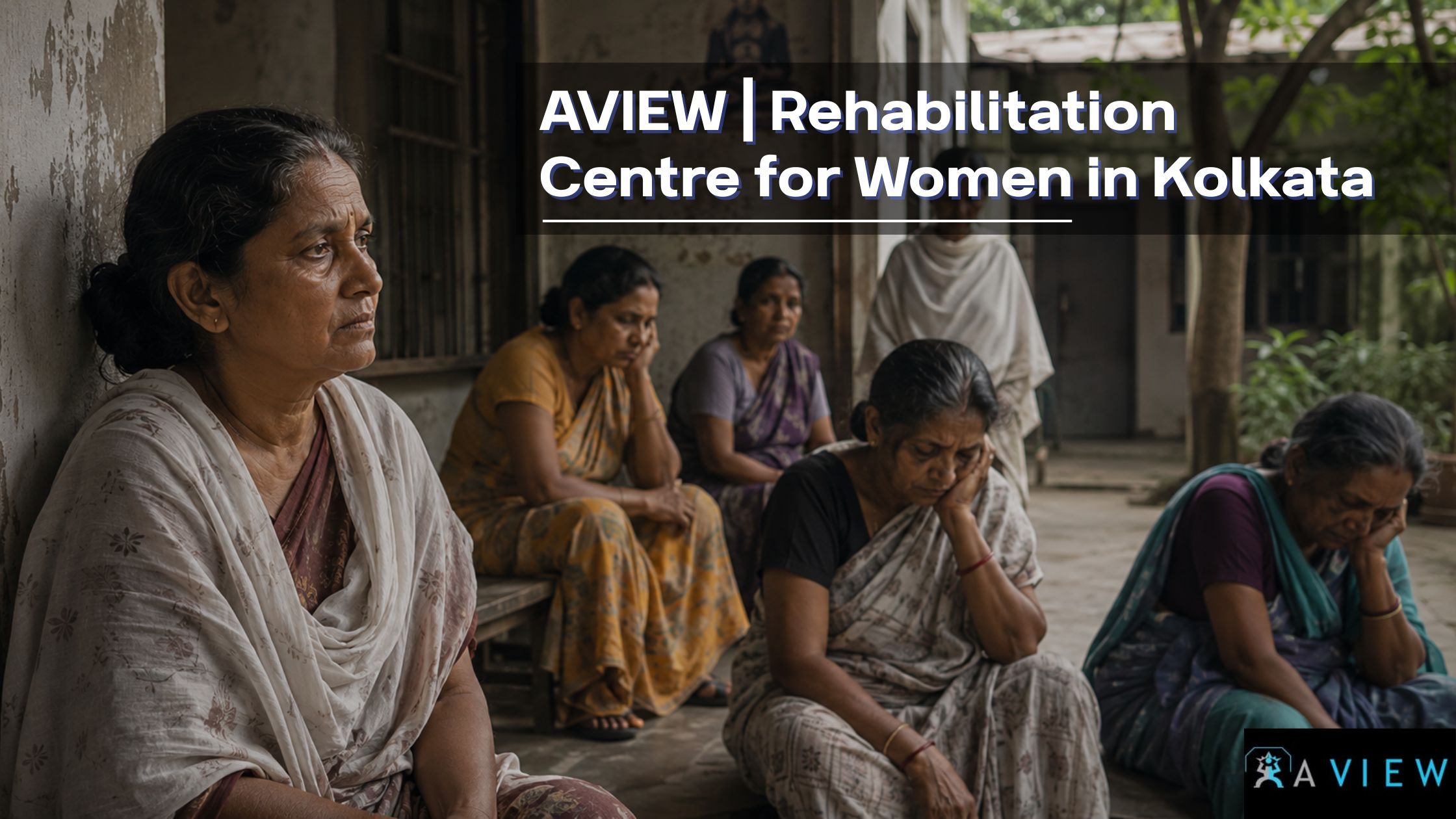
Rehabilitation Centre for Women in Kolkata: Rebuilding Dignity Through Community-Based Care
AVIEW (A Village for Independent and Enterprising Women) is a rehabilitation centre for women in Kolkata working with vulnerable women affected by destitution, emotional distress, abandonment, homelessness, and mental illness through community-based rehabilitation and long-term care.
For many women in India, the crisis does not arrive suddenly.
It builds slowly through untreated mental illness, poverty, abandonment, domestic violence, widowhood, social exclusion, and the absence of stable emotional support. By the time many women lose access to family or institutional care, they have often also lost financial security, healthcare access, emotional safety, and dignity.
That is why rehabilitation matters.
Unlike temporary support systems that focus only on immediate shelter, AVIEW’s work focuses on rebuilding stability, confidence, belonging, and independence through compassionate rehabilitation and community participation.
According to India’s 2011 Census, the country had over 1.77 million houseless people, highlighting the scale of vulnerability faced by people living without stable support systems.
Why Rehabilitation Centres for Women Matter
Women experiencing emotional distress or psychiatric illness often face layered vulnerability.
Mental-health challenges can intersect with:
- poverty
- abandonment
- domestic violence
- homelessness
- widowhood
- social stigma
- lack of treatment access
Once women are displaced from stable support systems, recovery becomes significantly more difficult.
Multiple public-health reports continue to highlight severe mental healthcare treatment gaps across India, especially in access to timely psychiatric care and community-based rehabilitation.
This is why a rehabilitation centre for women in Kolkata cannot function merely as a shelter.
It must become:
- a support system
- a place of emotional recovery
- a rehabilitation pathway
- a safe community environment
- a long-term reintegration model
That is the philosophy underlying AVIEW’s work.
The AVIEW Approach — Rescue, Rehabilitate, Restore
AVIEW structures its rehabilitation philosophy around three stages:
- Rescue
- Rehabilitate
- Restore
This framework reflects the reality that recovery takes time.
Women often require safety first, then structured rehabilitation, and finally opportunities to reconnect with society with dignity and confidence.
Rescue — Bringing Women Into Safety
Many women entering rehabilitation systems have experienced prolonged instability.
Some have survived abandonment.
Some have lived on the streets.
Some have experienced untreated psychiatric distress.
Some have lived through emotional trauma and social neglect for years.
The first stage of recovery is therefore safety.
At AVIEW, rehabilitation begins with care, stability, emotional support, and the creation of a safe environment where women can begin rebuilding trust and confidence.
For women in distress, rescue is not simply physical relocation.
It is the beginning of emotional stabilisation.
Rehabilitate — Rebuilding Routine and Confidence
Recovery becomes visible during rehabilitation.
This stage focuses on helping women gradually regain:
- routine
- participation
- emotional stability
- confidence
- social interaction
- purpose
At AVIEW, rehabilitation includes vocational engagement, community participation, and structured daily activities that help women reconnect with life beyond survival.
Meaningful routine and collaborative work can play an important role in emotional wellbeing and recovery.
Women participating in rehabilitation activities often benefit psychologically from:
- structured environments
- social connection
- creative participation
- community belonging
This makes rehabilitation far more humane and sustainable than systems based only on isolation or institutional dependency.
Restore — Reconnecting Women With Society
Restoration is not simply about discharge from care.
It is about helping women regain dignity, social confidence, and participation in everyday life.
AVIEW’s vision speaks about creating a society where women with mental illness can live with dignity, acceptance, and independence.
That distinction matters.
Women recovering from emotional distress or destitution should not remain permanently isolated from society.
They should be supported toward reintegration.
This community-oriented rehabilitation philosophy reflects a growing global understanding that recovery outcomes improve when people remain connected to supportive environments.
Why Community-Based Rehabilitation Matters
The World Health Organization has increasingly emphasised rights-based and community-based mental healthcare systems instead of purely institutional isolation models.
WHO guidance on community-based mental healthcare highlights the importance of:
- dignity-based care
- social inclusion
- vocational participation
- peer support
- recovery-oriented systems
- community integration
Globally, WHO estimates that around one in every seven people lived with a mental disorder in 2021.
For vulnerable women, community-based rehabilitation can be deeply transformative.
It helps women:
- rebuild confidence
- reduce isolation
- regain routine
- participate meaningfully
- improve emotional wellbeing
- reconnect with daily life
This is what makes AVIEW relevant not only as a rehabilitation centre for women in Kolkata, but also as a compassionate rehabilitation model focused on dignity and long-term recovery.
Rehabilitation, Dignity, and Women’s Empowerment
Women’s rehabilitation cannot be separated from empowerment.
Emotional recovery, social participation, economic stability, and community belonging all influence whether women are able to rebuild independence after a crisis.
AVIEW’s broader work reflects this understanding through conversations around:
- mental health
- women’s wellbeing
- emotional recovery
- rehabilitation
- social participation
- sustainable independence
The organisation’s approach recognises an important truth:
Women recovering from distress need more than temporary relief.
They need:
- continuity of care
- emotional support
- structured rehabilitation
- social belonging
- opportunities to participate meaningfully in life again
That is what makes a rehabilitation centre for women in Kolkata socially important beyond charity alone.
Why the Numbers Matter
The statistics surrounding homelessness and mental-health treatment gaps in India are not abstract.
They directly affect vulnerable women.
Women experiencing psychiatric distress often remain untreated for long periods due to:
- stigma
- poverty
- lack of access to care
- social abandonment
- institutional gaps
Many women disappear from formal support systems entirely.
That is why rehabilitation work matters.
A rehabilitation centre for women in Kolkata does not simply provide shelter.
It creates:
- continuity of care
- emotional safety
- rehabilitation pathways
- opportunities for participation
- supportive community structures
- long-term stability
That work cannot be measured only through charity metrics. It must also be understood through dignity restoration.
How Readers Can Support AVIEW
If you want to understand AVIEW’s rehabilitation philosophy and impact more closely, the organisation’s Success Stories section provides insight into rehabilitation through lived experiences and individual journeys:
You can also learn more about AVIEW’s broader mission and rehabilitation approach here:
If you would like to support rehabilitation efforts directly, you can donate to contribute toward long-term care and rehabilitation initiatives:
Conclusion
AVIEW matters because it treats rehabilitation as a deeply human process rather than a bureaucratic category.
The organisation recognises that women in distress need more than temporary support.
They need:
- safety
- emotional care
- structured rehabilitation
- meaningful participation
- dignity
- community
- independence
That is what makes AVIEW a meaningful rehabilitation centre for women in Kolkata.
Through community-based rehabilitation, emotional support, skill-building, and long-term reintegration, the organisation offers vulnerable women a genuine opportunity to rebuild stability, confidence, and belonging.